
9
The Spider Plant
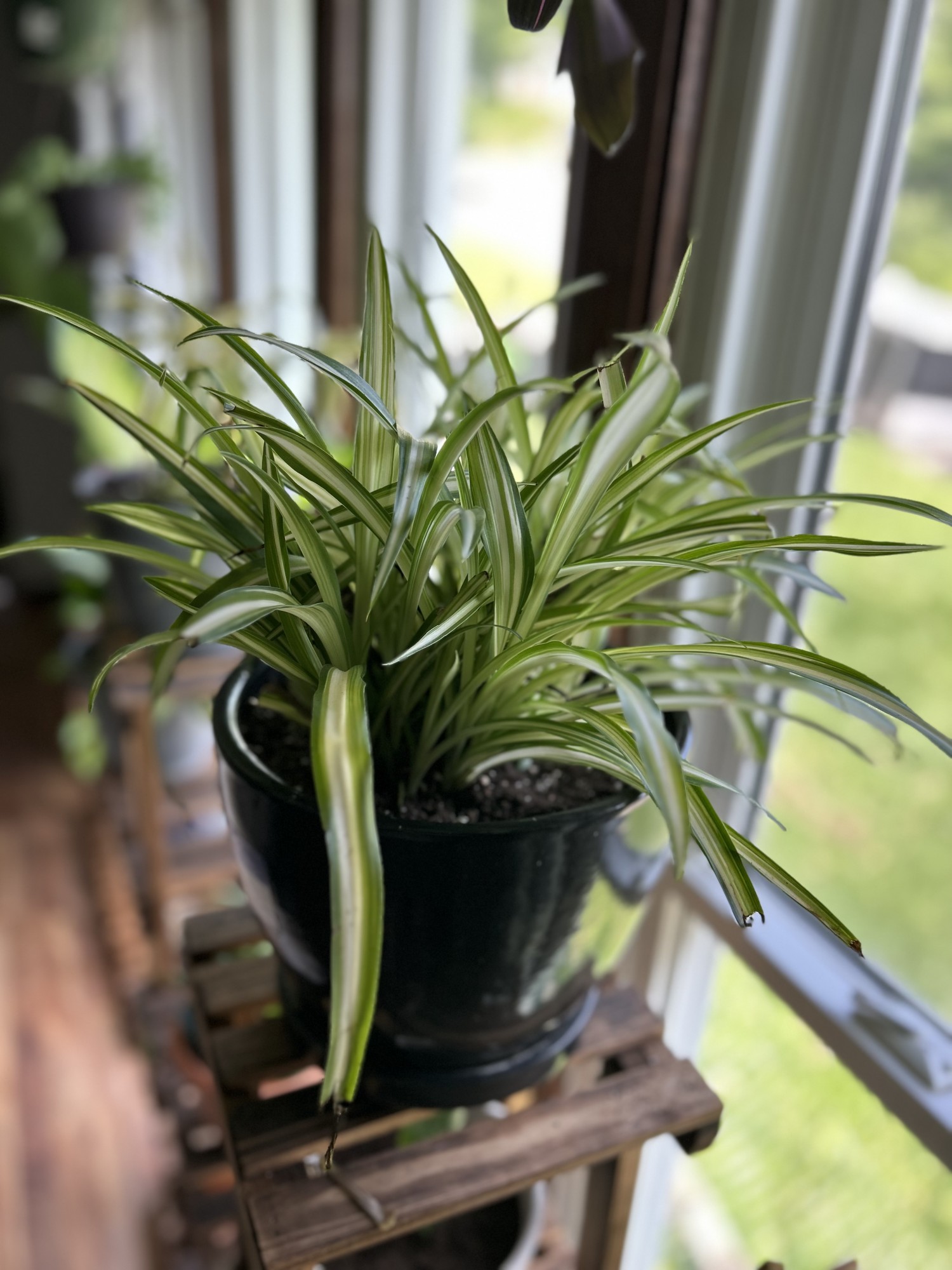
The spider plant (Chlorophytum comosum) is a popular indoor plant known for its arching, spider-like foliage. Native to South Africa, it has become a favorite among plant enthusiasts worldwide due to its ease of care and air-purifying qualities.
Care Instructions:
1. Light: Spider plants thrive in bright, indirect light. Avoid direct sunlight, as it can scorch their leaves.
2. Watering: Allow the top inch of the soil to dry between waterings. Overwatering can lead to root rot, so it's best to err on the side of slightly underwatering.
3. Soil: Use a well-draining potting mix that retains moisture without becoming soggy.
4. Temperature: Spider plants prefer average room temperatures between 65-75°F (18-24°C). They can tolerate slightly cooler temperatures.
5. Humidity: These plants can adapt to various humidity levels, but higher humidity can promote healthier growth.
6. Fertilization: Feed with a balanced, diluted liquid fertilizer once a month during the growing season (spring and summer).
7. Pruning: Remove brown or yellowing leaves to encourage new growth. You can also propagate spider plants by planting the "spiderettes" that form at the end of long stems.
8. Repotting: Repot young plants annually or when they become root-bound, typically every 2-3 years.
Spider plants are non-toxic to pets, making them a great choice for households with animals. With proper care, they can become attractive, cascading additions to your indoor space while helping to purify the air.

Privacy Policy / DMCA Notice / ADA Accessibility


